

Keys to strong healthy connections
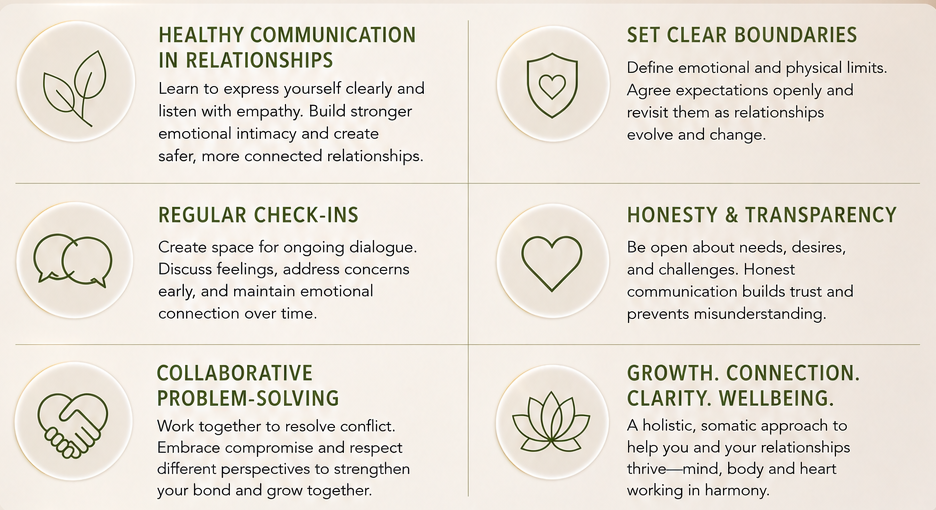
Growth • Connection • Clarity • Wellbeing
True relational wellbeing goes beyond communication tools, it’s about how we relate to ourselves as well as others. A holistic, somatic approach recognises that our bodies, emotions, and past experiences all shape how we connect.
Growth comes from awareness, learning your patterns, triggers, and desires. Connection deepens when you feel safe in your own body and open to others. Clarity emerges when you understand what truly matters to you. And wellbeing is the result of aligning all of these.
Whether navigating monogamy, ENM, or polyamory, this work is about creating relationships that feel nourishing, conscious, and aligned, where everyone involved can thrive.
No relationship is perfect, every relationship evolves and with the right communication, guidance and support Every relationship can thrive
Navigating new & old relationships
·
Healing from the past
·
A Focus on the future
·
Navigating new & old relationships · Healing from the past · A Focus on the future ·
Healthy Communication in Relationships
Healthy communication is the foundation of any meaningful relationship. It’s not just about talking, it’s about feeling heard, understood, and safe to express your inner world.
Start by slowing conversations down. Notice when you’re reacting versus responding. Practice speaking from your own experience using “I” statements rather than blame or assumption. For example, “I feel disconnected when we don’t spend time together” invites connection, while criticism can create distance.
Equally important is listening. Not to reply, but to truly understand. This means putting aside defensiveness, staying curious, and reflecting back what you hear. Over time, this builds emotional safety, allowing both people to show up more authentically.
Set Clear Boundaries
Boundaries are not walls—they are the foundations of respectful, sustainable connection. They help define what feels safe, supportive, and aligned for you emotionally, physically, and relationally.
Setting boundaries begins with self-awareness. What do you need to feel secure, respected, and valued? From there, communicate those needs clearly and without apology. Boundaries are not demands, they are invitations for others to meet you in a healthy way.
In evolving relationships, especially in ENM or polyamory, boundaries should be revisited regularly. As dynamics shift, so do needs. Clear, compassionate boundary-setting prevents resentment and creates space for deeper trust and autonomy.
Regular Check-ins
Relationships thrive on intentional attention. Regular check-ins create a space to pause, reconnect, and ensure both people feel seen and supported.
Rather than waiting for issues to arise, build a rhythm of open dialogue. This might be a weekly conversation where you reflect on what’s been working, what feels challenging, and what you each need moving forward.
Check-ins aren’t just for problem-solving, they’re for celebrating growth, expressing appreciation, and deepening intimacy. They help prevent small disconnections from becoming larger ruptures, keeping the relationship aligned and emotionally connected over time.
Collaborative Problem-Solving
Conflict is not a sign of failure—it’s an opportunity for growth when approached with care. Collaborative problem-solving shifts the dynamic from “me vs you” to “us vs the issue.”
Instead of trying to win, focus on understanding. What is each person really needing beneath the surface? Often, conflict is rooted in unmet needs or misunderstood emotions.
Work together to find solutions that honour both perspectives. This may involve compromise, creativity, and patience. When handled well, conflict can actually strengthen connection, building resilience and deeper emotional intimacy.
Honesty & Transparency
Honesty is the backbone of trust—but it requires courage, especially when sharing vulnerable truths. Transparency means allowing yourself to be seen fully: your needs, fears, desires, and uncertainties.
In all relationship styles—but particularly in open or polyamorous dynamics—honesty is essential. Withholding information, even with good intentions, can create disconnection and erode trust over time.
Practice honesty with compassion. You can be truthful and kind at the same time. When both people commit to openness, it creates a relationship where authenticity replaces fear, and trust becomes something solid and lived—not just hoped for.
Navigating ENM, Open Relationships & Polyamory
Exploring ethical non-monogamy (ENM), open relationships, or polyamory can be deeply enriching, but it also requires intention, communication, and self-awareness.
These relationship styles invite you to move beyond default assumptions and consciously co-create agreements that work for everyone involved. This means being clear about expectations, managing jealousy with curiosity rather than shame, and prioritising honesty at every stage.
It’s not about having more relationships, it’s about having more conscious ones. With the right support and tools, ENM can offer expanded connection, personal growth, and deeper relational fulfilment.